
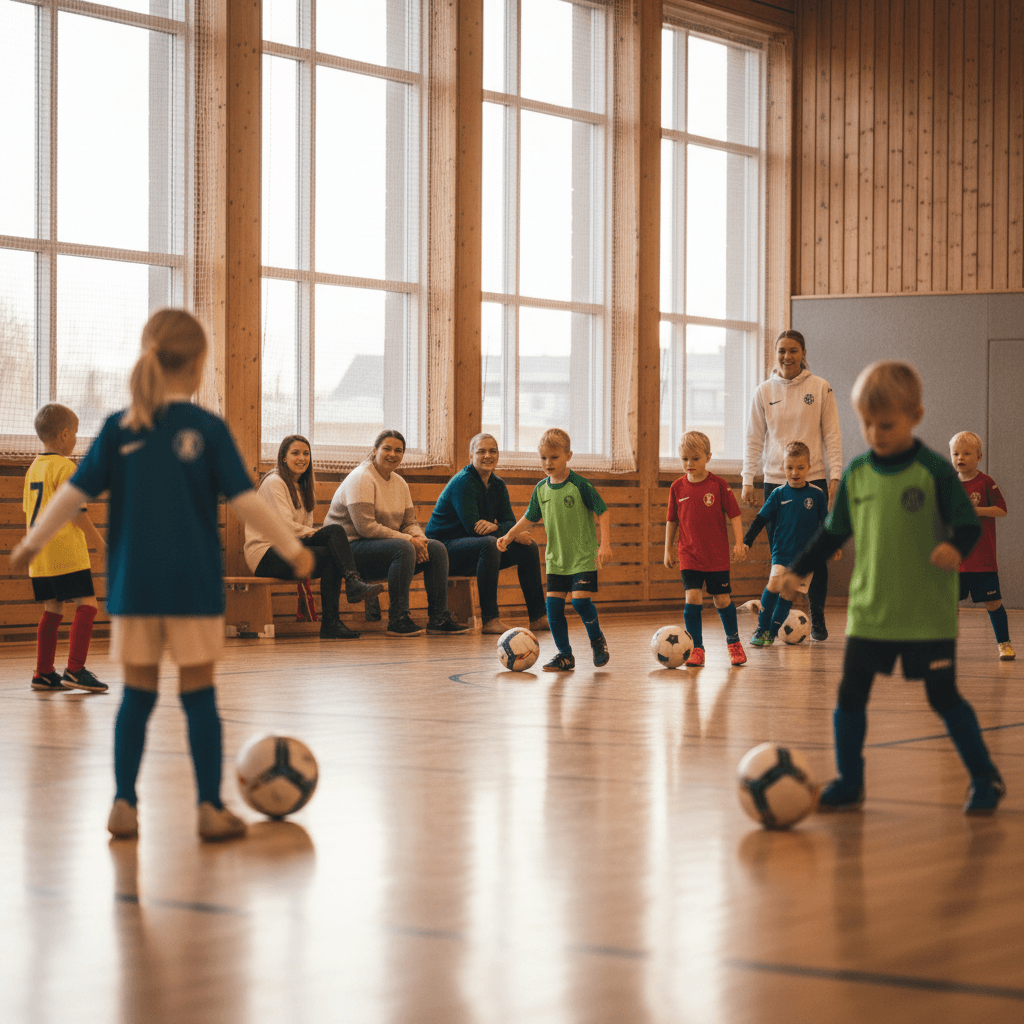
Learn what LAM is, how the money is allocated to sports clubs and what it is meant to be used for.
Many clubs know that local activity funds exist, but are unsure what the money can actually be used for — and how it is allocated.
In this article, we give you a practical walkthrough of the LAM scheme: how the money is allocated and what it is meant to be used for.
More than 500 Norwegian organisations already use Rubic to make everyday work easier.
What is LAM?
Local activity funds (LAM) are a government grant scheme for sports clubs with activities for children and young people. The funds are gaming funds from Norsk Tipping's profits. The Ministry of Culture and Equality transfers them to the Norwegian Confederation of Sports (NIF), the municipal sports council allocates them, and NIF pays them out directly to the sports clubs.
The purpose of LAM is to support activities for children and young people aged 6–19. The money is meant to help keep the threshold for taking part in organised sport low.
What can LAM be used for?
According to the ministry, it is the clubs' core activities that should be supported. The funds are meant to underpin the volunteer effort in the club and help keep the cost of taking part down. The ministry's guidelines for the allocation do not list individual items.
An administration system that makes it easier to organise training sessions, matches, communication and finances can take some of the load off volunteers. Whether such a cost falls within the purpose is, however, something the board must assess for itself.
How much LAM does a sports club receive?
The amount varies from municipality to municipality and depends on:
- The number of active members aged 6–19
- The municipality's total allocation
- The allocation criteria adopted by the sports council
How much the club has received previously is shown in the allocation published by the sports council. NIF also publishes the allocation on idrettsforbundet.no and tilskudd.no.
How your sports club gets LAM
Sports clubs do not need to apply for LAM. The sports council allocates the funds according to criteria adopted at its annual general meeting, based on figures from the coordinated reporting (samordnet rapportering). This is what the club should keep an eye on:
1. Keep track of the sports council. The sports council allocates the year's funds in the autumn — in 2026 between 15 August and 15 November. Check the sports council's criteria and whether it sets its own requirements, such as attending an allocation meeting.
2. Make sure the figures in the coordinated reporting are correct. The allocation is based on the membership or activity figures the club has in the coordinated reporting, split into children (6–12 years) and young people (13–19 years). From the reporting for 2025, membership figures are taken from paid memberships in the club's membership system and cannot be registered manually. Memberships invoiced in a system that is not approved under NIF's regulations are not counted.
3. Run activities for children and young people. Clubs without activities for children and young people (6–19 years) do not receive funds, even if they carry out recruitment aimed at the target group.
4. Check the payment. Once the regional sports association has approved the allocation, NIF pays the amount directly to the club. If the club receives an allocation letter from the sports council, it can be used as a voucher in the accounts.
5. Use the funds for their intended purpose. NIF does not require reporting on how they are used, but the money must go towards the club's activities for children and young people. Tidy accounts make it easy to show what it has been spent on.
Read more about Rubic Regnskap — built for sports clubs →
Why are good tools an investment in activity?
Some may feel that “system costs” do not belong in activity funding. But think of it this way:
When team managers no longer have to spend their evenings on spreadsheets, text message lists and manual invoicing, they get more time to plan training sessions and follow up players. When the accounts are kept up to date and correctly, the basis for VAT compensation is in place — money that can go straight into activities.
Good tools are not a cost. They are a prerequisite for volunteers having the energy to carry on.
Getting started
- Check how much LAM your club receives
- Assess whether your current administration and accounting can be improved
- Assess whether the cost falls within the purpose of LAM
- Get in touch with us for a no-obligation chat about what Rubic can do for your club
Book a free demo → rubic.no/demo