
How to organise an event — from a local cup to the World Ski Championships
A successful event depends on three things: good registration, good coordination of volunteers, and good access management. Norwegian event organisers such as Norway Cup (1,700 volunteers), Ski-VM 2025 (accreditation) and Tons of Rock use Rubic Arrangør to handle all this on one platform — instead of patching together separate registration tools, Excel and email.
Contents
What needs to be planned first when you organise an event?
Three things determine everything else: date, venue and number of participants. Once these are fixed, you can build registration, payment, volunteer setup and communication on top.
A common mistake: starting with "we need a website" before the target group is defined. Turn it around — define participants, resources and deadline, and the rest follows.
How do you set up registration?
The registration system must handle several price categories (member price, non-member price, early-bird price), discount codes, options (T-shirt size, allergies, dietary preferences), and automatic confirmation.
Sports events also need: registration per team, age checks, class selection and licence checks. Festivals need tickets with reserved seating or free seating.
Which payment methods should you offer?
In Norway, Vipps is the standard — without Vipps you lose paying participants. Card is necessary for participants from abroad. Invoice is required for companies and team registrations.
Pricing tip: With the Rubic packages, the standard transaction fee is 2.5% + NOK 2 for card and 2.5% + NOK 3 for Vipps. Standalone Rubic Event has its own fee: 2.5% + NOK 5 per registration.
How are volunteers coordinated?
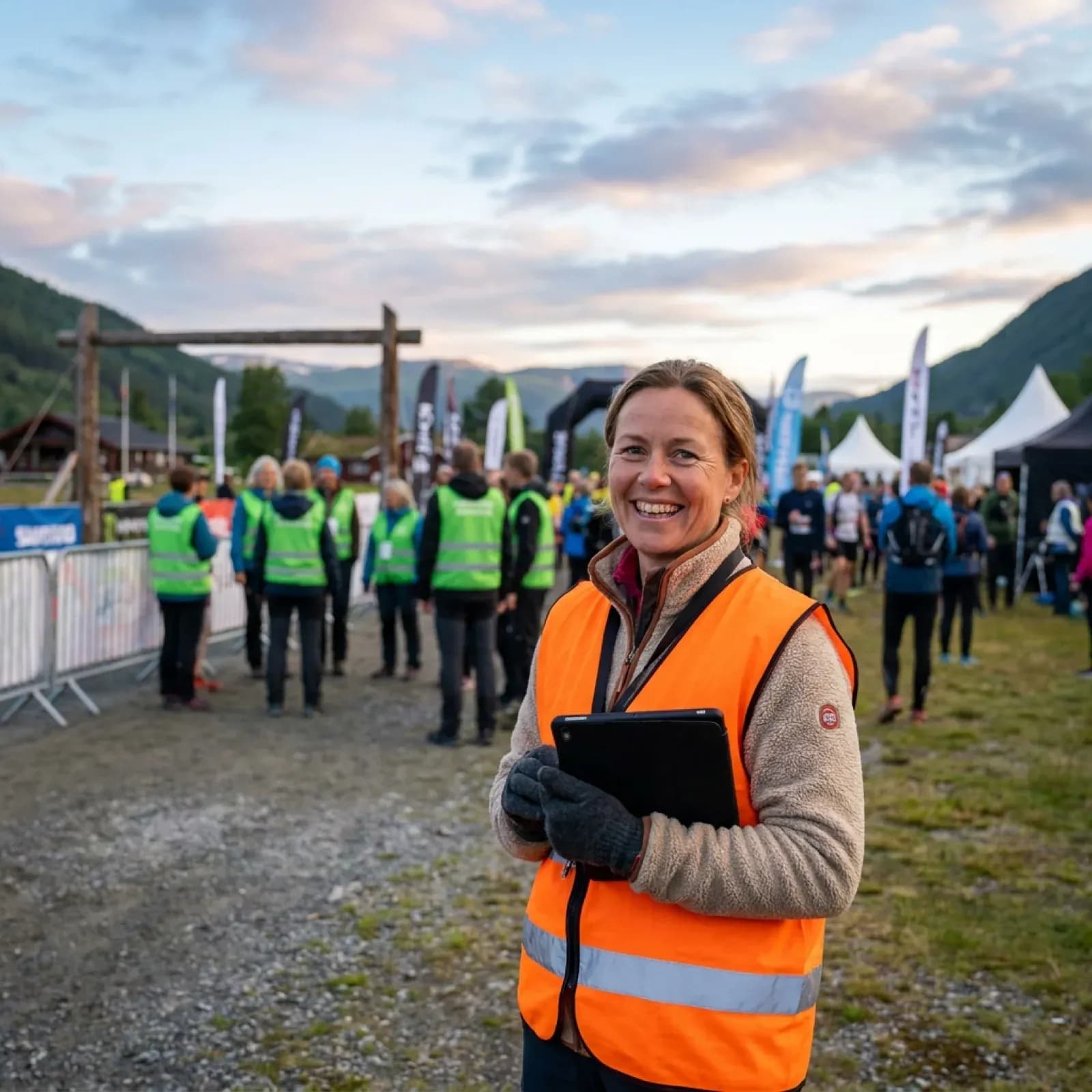
This is the biggest coordination challenge for event organisers. You need to know: who has signed up, which shift they have, whether they have turned up, and whether they have received what they need (food, T-shirt, instructions).
Rubic Organizer is Rubic's volunteer management module. Norway Cup has used it for 1,700 volunteers and 4,000 shifts. Each volunteer gets registration, shift allocation, notifications and confirmation in one app.
What is accreditation and when do you need it?
Accreditation is role- and zone-based access for an event. Which areas can a volunteer enter? What about the press? Backstage? VIP?
For small events, coloured T-shirts are enough. For larger events (500+ participants/volunteers) you need QR codes and scanning at the zones. Ski-VM 2025 used Rubic Accreditation for this.
How do you communicate with participants before, during and after?
Before: registration confirmation, practical information, travel tips, map, contact person.
During: updates when things change (weather, queues, capacity). Push notifications work best — with SMS as a backup.
After: thank-you message, feedback form, photos, next event.
With Rubic Communication you can segment messages (volunteers only, team X only) and schedule mailings in advance.
What needs to be done after the event?
- Financial settlement — Vipps payouts to the club's bank account, supplier payments, bookkeeping
- Report — number of participants, revenue, costs, net result
- Feedback — from volunteers, participants, partners
- Lessons learned — what worked, what needs to be done differently next year
- Archiving — photos, video, participant lists, settlements
The difference between a local cup and a major event
Local cup (50–500 participants): one registration form, one Vipps account, one volunteer plan. Rubic Arrangør on its own is enough.
Mid-sized festival (500–5,000): several ticket categories, sponsor management, accreditation for staff. Requires the full Rubic Arrangør + Accreditation.
Major event (5,000+): international participants, press, VIP, external supplier staff. Rubic + integrations with accounting (ECIT), POS systems (Fygi), and external logistics.
See Rubic in action
Book a 30-minute walkthrough, or try it yourself for 30 days.