
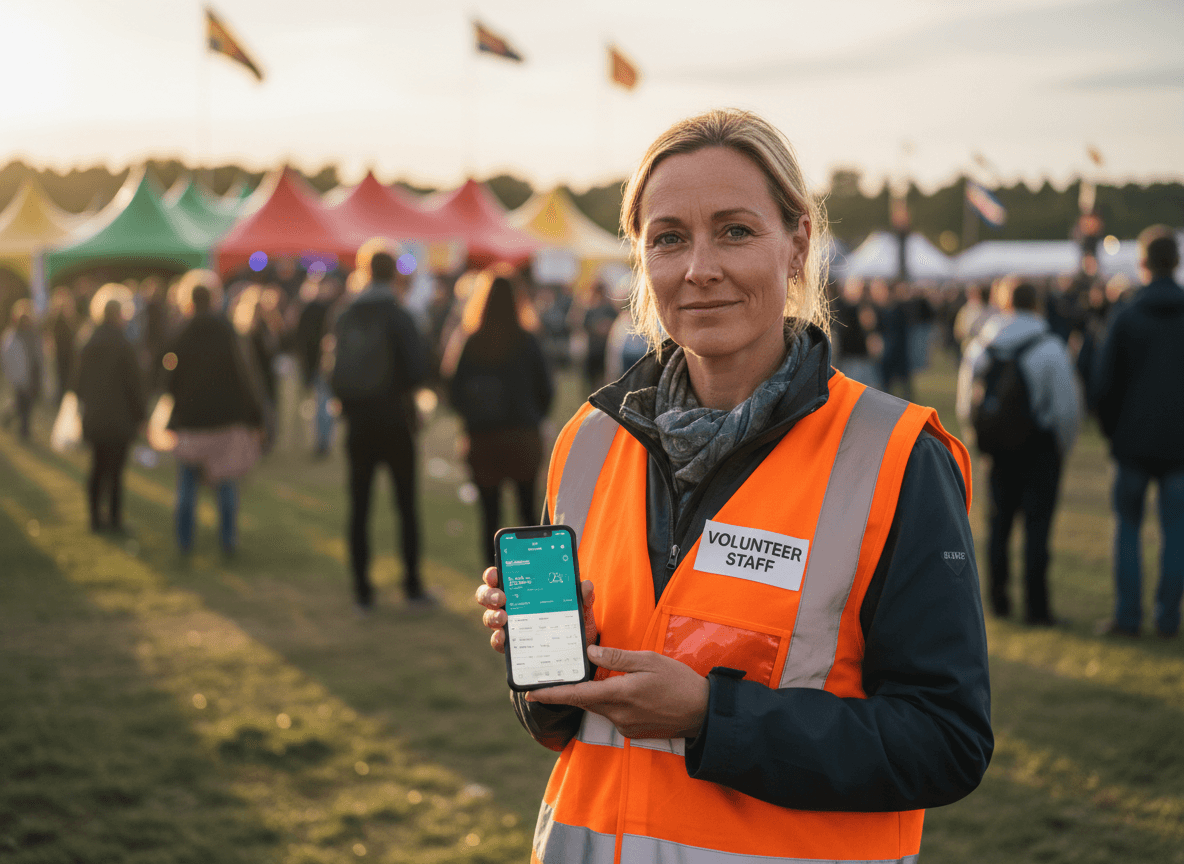
Three challenges come up again and again in many sports clubs: too few volunteers for volunteer work (dugnad) and events, volunteers who don’t show up, and poor planning of volunteering.
Many clubs fall into the same trap: They settle for asking “who can help out?” instead of building a culture of volunteering.
We see it at the most successful clubs we work with — 1,700 volunteers at Norway Cup. What happens when volunteers become engaged is that they come back.
Here are 7 steps that actually work.
1. Make the role attractive before you ask
Unclear role = volunteer who doesn’t show up.
Instead of “We need people for volunteer work”, say:
Example: “We need 4 people to coordinate check-in at the race on 15 August, 08:00–11:00. You get a gift card and a free T-shirt. No experience needed — we’ll show you what to do. Sign up here: [link]”
This works better because it:
- Specifies the date and time (no ambiguity)
- Says what you will do (coordinating check-in)
- Shows what you get in return (gift card, T-shirt)
- Lowers the threshold (“no experience needed”)
- Offers easy registration (one link)
In Rubic Organizer, you do it like this: You set up “Check-in 15 August” as a role, list all 4 places, set a deadline and send a link. Volunteers sign up themselves. No e-mail chains.
2. Divide the work properly
Poor distribution is frustrating and unfair.
Make a list of tasks before you ask anyone:
- Small tasks (under 2 hours): Check-in, stewarding, refilling drinks
- Medium tasks (2–4 hours): Coaching, running a tent, transport
- Large tasks (all day): Planning, responsibility for an area
People are happy to say yes to small tasks. They are often reluctant to take on big ones. But when you split a big task into small ones, more people get to take part — and it feels better.
Example: Instead of “Can you organise the summer party?” (vague, big), say:
- “Can you book the venue?” (clear task)
- “Can you coordinate food and drink?” (clear task)
- “Can you set up music and decorations?” (clear task)
Three volunteers, three small tasks, one event that gets done.
3. Communicate simply — no e-mail chaos
Every e-mail you send a volunteer risks going unread.
Instead: Use a system that volunteers actually know.
Rubic clubs use SMS, e-mail or the app together with a shared shift schedule. They set up a shift or task, and the system sends a reminder before the shift. Volunteers know where to meet and what to do.
If you use ad hoc solutions (Facebook, WhatsApp, Google Sheets), things get chaotic as the club grows. Some see the message, some don’t. Some post in the wrong group.
A volunteer calendar that everyone can access on their phone can reduce the number of volunteers who don’t show up.
4. Recognise the effort — make it visible
Volunteers who are never thanked quit.
Make the recognition public:
- Announce a “volunteer of the month” in the newsletter
- Tag volunteers on social media when they do a good job
- Record the hours volunteers work, and share them every year (“You put in 80 hours this year, thank you!”)
- Give small gifts: Gift cards, a shirt with the club logo, a certificate
Large clubs hold an annual volunteer evening where the most dedicated volunteers receive an award.
It doesn’t have to be expensive. It just has to be sincere.
5. Create a culture, not just tasks
A sports club where people like each other recruits volunteers by itself.
A volunteer says to a friend: “We had fun at the sports club’s event. You should come along next time.”
How do you build it?
- Shared experience: Volunteers work together in teams, not alone
- Social time: 15 minutes before the event starts, volunteers gather for coffee/squash
- Belonging: They wear volunteer vests that make them recognisable
- Community: Volunteers are invited to the club’s annual party or a thank-you party
This culture takes time to build. But once it is in place, you no longer need to advertise for volunteers.
See how Rubic brings shifts, volunteer work and communication together — the same tool Norway Cup uses to staff 4,000 volunteer shifts.
6. Make registration as easy as possible
If registration takes more than 3 minutes, you lose people.
Bad: “Fill in this form, upload photos of yourself and write 500 words about your motivation.”
Good: “Enter your name, phone number and the days you’re available. Done.”
Rubic Organizer has a simple registration link. The volunteer says yes, you are notified, and she gets a reminder before the event. Done.
The simpler it is, the more people join in.
7. Follow up — not just at the next event
Volunteers who get feedback come back.
Send an SMS or a short e-mail the day after the event:
“Thank you for helping at the race yesterday! Feedback from a runner: ‘Check-in was painless and quick.’ That is why we have so many volunteers — you and others who do a great job. Hope to see you again.”
This takes 30 seconds to write. But the volunteer reads it and thinks: “I’m valued here. I’ll be back.”
Volunteers who get no feedback think: “They needed help. Now it’s over. Maybe they’ll call next time, maybe not. I’m not going to wait for it.”
Summary: 7 steps to better volunteering
- Make the role attractive — specific, not vague
- Divide the work — small tasks instead of big ones
- Communicate simply — one system, not five
- Recognise — make it visible and sincere
- Build a culture — not just transactional tasks
- Easy registration — under 3 minutes
- Follow up — thanks and feedback afterwards
Clubs that do this get fewer volunteers who don’t show up.
It’s not chance. It’s a system.