
For many teams and associations, this is peak season for planning. That makes it worth setting up an annual planner – a powerful tool that makes things easier for everyone involved, whether it's a sports club, an association or an event organiser.
An annual planner is an overview – often circular and broken down by month – of what happens in the organisation over the course of the year. It is a practical and useful tool that gives both an overview and predictability to administrators, leaders, support staff and members.
Rubic's customers use annual planners
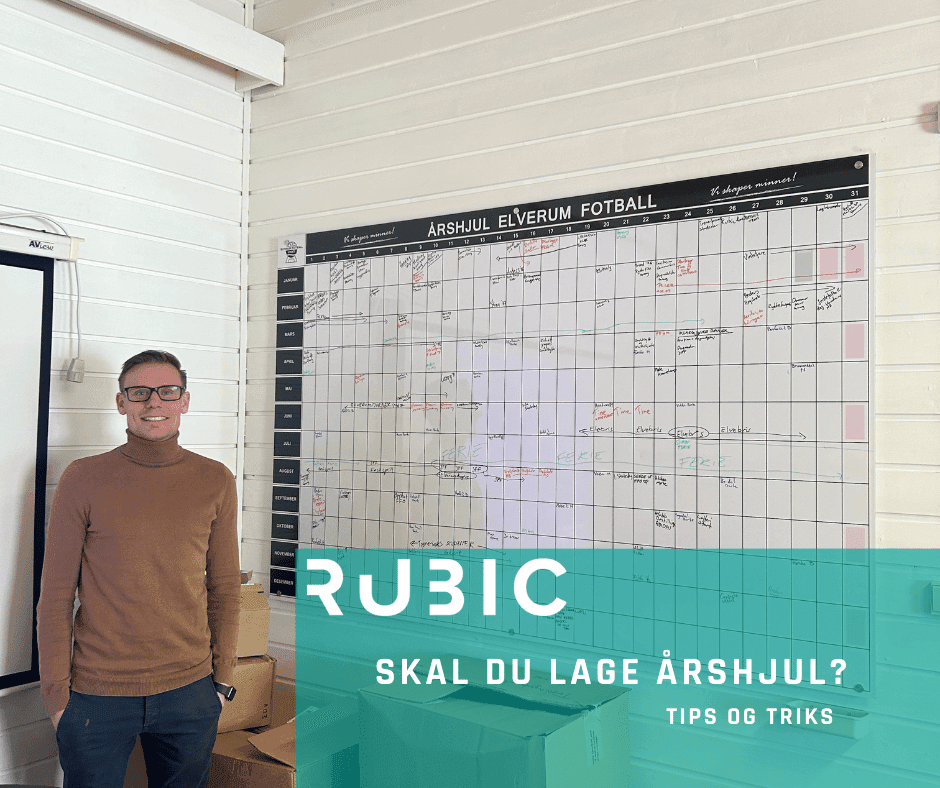
An annual planner doesn't have to be circular. There are also linear ones, laid out more like a calendar. Many have seen how useful annual planners are, including Elverum fotball, which uses the linear version. We visited them recently, and they couldn't praise enough how much help an annual planner is to them.
- This board is worth its weight in gold to us. It means everyone knows what's happening at all times – a good reminder for all of us. I'd say the board is one of the best investments we've made.
- We set out the items together just before Christmas. That made it really pleasant to come back in the new year with a full overview of what needs doing and, not least, what to remember, said Georg Flatgård, general manager of Elverum fotball.
How to create an annual planner
Start with a workshop, a joint meeting or a discussion thread where everyone can contribute. Go through it month by month, and let everyone give input on important times and dates for, for example:
- Competitions
- Sports reporting
- Training camp
- Events
- Registration deadlines
- Payment deadlines (competitions, membership fees, etc.)
- Annual general meeting
- Christmas party
- Summer party
- Holidays
- Trips
- Dugnad (volunteer work)
- etc.
Remember: it isn't a static document – new important dates will need to be added throughout the year. Norges Idrettsforbund offers a free digital annual planner for all sports clubs. You can also download one from Visma. There are also dedicated annual planners that can be integrated with Teams and SharePoint.
Involves and inspires
By mapping out all activities and tasks with an annual planner, you engage volunteers, members and support staff alike. Most people lead busy lives and have many other people to consider when they plan. The earlier the important dates are in place, the easier it is to plan holidays and other events around them. This will most likely ensure better attendance on the important days, whether it's an event, a competition, volunteer work or a party.
Put the annual planner up in the changing room or another shared area where everyone can see it, and also make it available digitally – on your website and social media – and share it in Rubic Connect. That way, everyone stays up to date at all times. You can also set up a suggestion box (physical or digital) where people can suggest what should be included in the annual planner.

Benefits
Everything is easier with a plan. It's easier to handle changes. Not least, it creates trust and security when everyone feels part of the plans, and each person has a full overview of both their own and others' tasks.
Benefits for the organisation:
- Easier budgeting
- Overview of costs
- Easier allocation of hall times and setting up the activity calendar
- Simple sports reporting
- Better cash flow, as more people pay, and on time
- Opportunities to negotiate good prices over time
- Having enough volunteers for the various events
- Scheduling volunteer work and other ways of raising money for planned events
For members, athletes, leaders and parents:
- Predictability
- Easier to plan training around competitions
- Anticipation of exciting things to come
- Possible to save up over time for bigger financial commitments, such as trips and training camps.
- Easier to plan everyday life without it clashing with training
Proactive
An annual planner can be as comprehensive as you like and still give a good overview. A circular annual planner can, for example, have a ring for each age group or sport. That makes it easy to see if anything overlaps and plan accordingly – perhaps two events that fall on the same day, and how to sensibly allocate leaders, volunteers and athletes as a result.
Not least, this is a good planning tool for all your digital channels and any external promotion of events. With this overview, you can publish events early, fill up registrations and make people aware of what's happening in your organisation. That in turn gives you a much better chance of getting enough participants, volunteers and spectators for what you're organising.